27 October 2026
Understanding Kubota Key Programming for Mini Digger Operators
Presented by @thekubotakeyprogrammingspot
If you run a Kubota mini digger on a UK site, you already know that a lost or broken key stops the machine dead. Unlike a standard house key, a Kubota key is often a transponder key that communicates with the machine's immobiliser. Without proper Kubota key programming, a simple metal cut won't start the engine. I have spent over a decade working with construction equipment and key systems, and I can tell you that the difference between a key that works and one that doesn't often comes down to the programming step.
Many operators assume that any key cutting service can handle a digger key. That assumption costs time and money. A Kubota key is not just a shape in brass. It is a key fob that contains a small chip, and the machine lock expects that chip to send the right signal. If the chip is not programmed correctly, the machine stays locked. This is where specialist knowledge matters. A UK-based provider that has been doing replacement keys and key programming since 2010 understands these nuances.
What Makes Kubota Key Programming Different
Standard key duplication is straightforward. You take the original, trace the profile, and cut a copy. With a Kubota key, you also need to match the electronic code. The key fob holds a unique identifier that the machine's control unit recognises. When you insert the key and turn it, the machine checks that identifier. If it matches, the immobiliser disengages and the engine can start. If it does not, nothing happens.
This system exists for site security. Construction equipment is expensive and often left on sites overnight. A machine lock that requires a programmed transponder key makes theft much harder. But it also means that losing your only key is a real problem. You cannot just walk into a high street shop and get a copy made. You need a replacement key that is both cut to the right mechanical profile and programmed with the correct code.
Key Code and Key Blank Compatibility
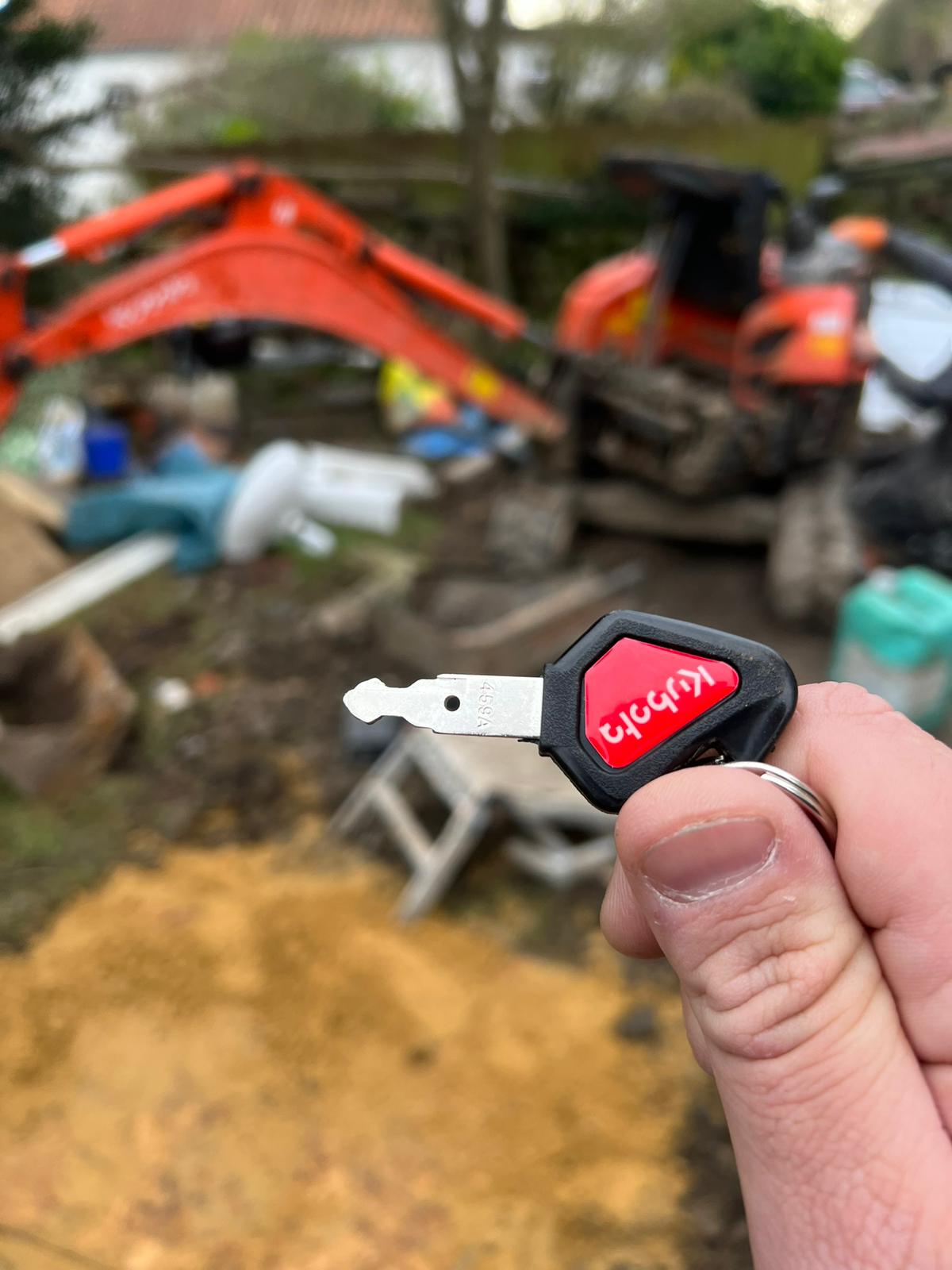
Every Kubota mini digger key uses a specific key code that corresponds to a particular machine model. The key blank must match both the physical lock and the electronic system. For example, a Kubota KVX series uses a different blank and code than older models. If you order a replacement key without knowing the code, the key encoder cannot program it correctly. The key code is usually stamped on the original key or recorded in the machine's documentation. If you have neither, a specialist can often determine the code from the machine's serial number.
I have seen cases where a customer buys a cheap blank online, gets it cut locally, and then cannot understand why the machine ignores it. The blank might be physically correct, but without the right programming, it is just a piece of metal. That is why key programming is not an optional extra. It is the core of the process. A genuine replacement key comes as a complete unit: the physical key cut to the right profile, and the transponder key programmed to match the machine's immobiliser.
The Practical Side of Getting a Replacement Key
When you need a new digger key in the UK, speed matters. A machine sitting idle costs you money. That is why same-day dispatch is a significant advantage. A provider that can cut and program the key and get it in the post on the same day minimises downtime. The postal service is reliable for this, but you need to ensure the vendor understands the urgency. I always recommend calling ahead to confirm stock of the correct key blank and to verify that they can program it for your specific model.
Key duplication for a Kubota key is not a DIY job. The key encoder used by professionals is calibrated to read and write the exact frequency and data format that Kubota uses. Consumer-grade programmers often cannot handle the proprietary protocols. This is not a case where a generic device works. You need a specialist who has the right equipment and the experience to use it.
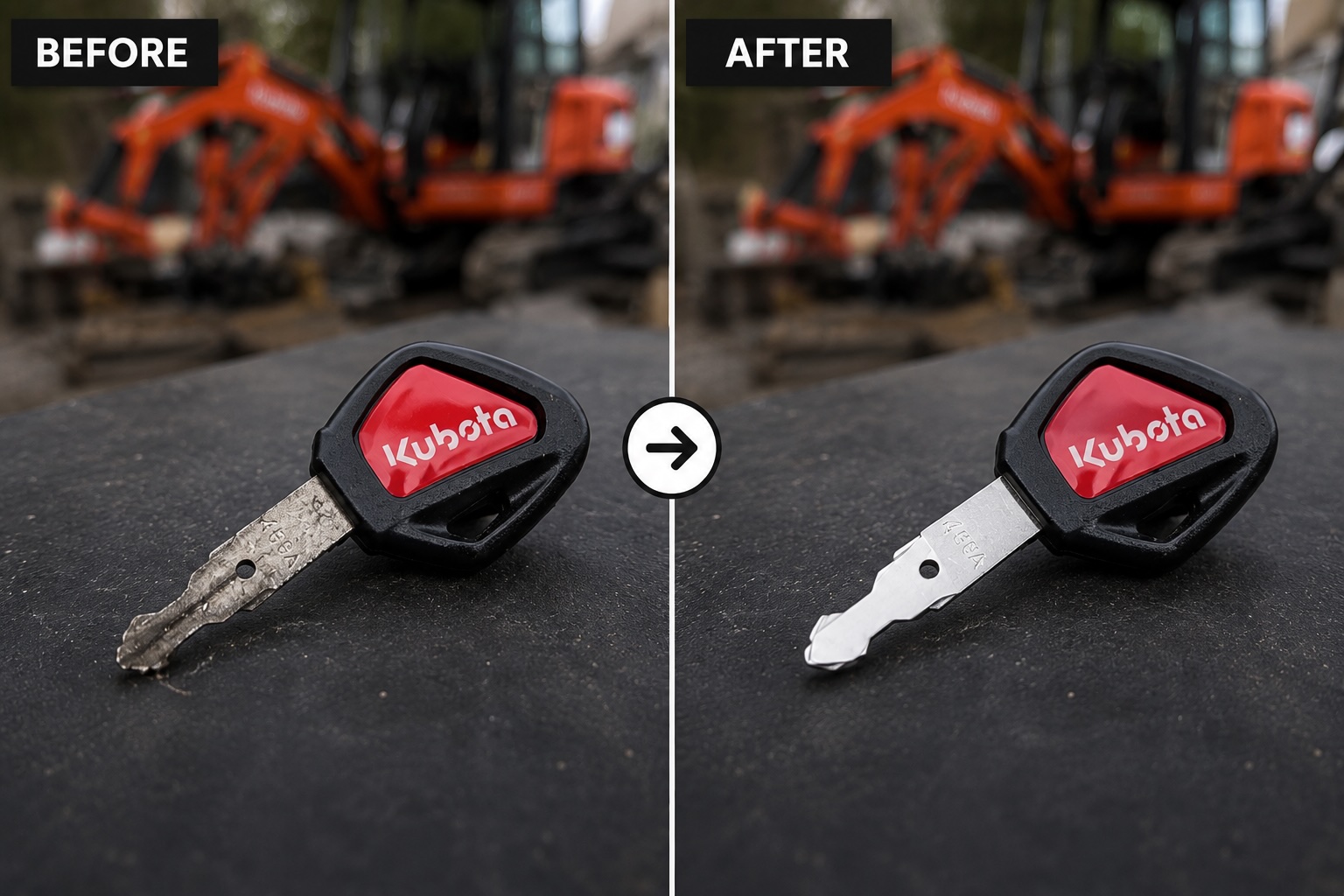
Another practical detail: always check the physical condition of your existing key before ordering a copy. If the original is worn, the machine lock might also be worn. A new key cut to the original profile might fit tightly or loosely. A good key cutting service will ask about the condition of both the key and the lock. They might recommend a slight adjustment to the cut to ensure smooth operation. That kind of judgment comes from experience, not from a machine.
Why Specialist Providers Matter
There are many companies that offer key programming for car keys, but far fewer that focus on construction equipment. Kubota key programming requires familiarity with the specific chips and protocols used in mini diggers. A provider that has been doing this since 2010 has seen the changes in technology. They know which models use which chips. They know that a key fob for a 2015 machine might use a different chip than a 2020 model. They also know that some machines require a specific sequence when programming the key, and that getting it wrong can lock the system temporarily.
I have spoken with operators who tried to save money by using a general key service. They ended up paying for two or three attempts before getting a working key. That is not a saving. It is a waste of time and frustration. A single correct replacement key, properly programmed, costs less in the long run. And if the provider offers a fast postal service, you get the key in days rather than weeks.
Site Security and Key Management
One aspect that often gets overlooked is key management on site. If you have multiple operators using the same machine, you need multiple programmed keys. Losing one key should not stop the job. I advise keeping a spare programmed key in a secure but accessible place, not locked in the same box as the original. That way, if one key goes missing, you have a backup. And when you order a replacement key, order two. It costs a little more upfront but saves a lot of hassle later.
The machine lock itself can also wear out. If you find that a programmed key is becoming hard to turn, do not force it. The lock might need lubrication or replacement. A worn lock can damage a new key blank, and then you are back to square one. A good key service can advise on lock condition and may even supply a lock and key set if needed. But for most cases, a well-cut and properly programmed key works smoothly for years.
Getting the Code Right
The most common mistake I see is people assuming that any Kubota key will work on any Kubota machine. That is not true. The key code is unique to each machine's immobiliser. Even two identical models from the same year can have different codes. The key encoder must write that specific code into the transponder key. If the code is wrong, the machine will not start. That is why you need to provide accurate information when ordering. The machine serial number, the key code from the original, or both.
Some newer Kubota models use a rolling code system for added security. That requires a key encoder that can handle dynamic codes. A specialist provider will have the tools to deal with that. A general key cutting shop probably will not. So when you search for a replacement key, look for a provider that specifically mentions Kubota key programming. That is a good sign that they understand the technology.
In the end, a Kubota mini digger key is a small but critical part of your equipment. Treat it with the same care you give to the machine itself. When you need a replacement, go to someone who knows what they are doing. The time and money you save by getting it right the first time is worth more than any discount from a generalist. And if you are in the UK, you have access to specialists who can get you a working key fast, with proper programming and fast delivery.